
Leadership Overview
Utah Food Bank has 4 executives leading key functions including strategic oversight, operational logistics, human capital management, and facility operations.
Committed to eradicating food insecurity across the region, Utah Food Bank drives sustainable solutions to ensure every community member gains access to essential nutritional resources through collaborative statewide partnerships.
Committed to eradicating food insecurity across the region, Utah Food Bank drives sustainable solutions to ensure every community member gains access to essential nutritional resources through collaborative statewide partnerships.
Leadership Roles at Utah Food Bank
Ginette Bott - President & Chief Executive Officer
Ginette Bott, the President & Chief Executive Officer at Utah Food Bank, directs the overarching mission to eliminate hunger throughout the state. By aligning organizational goals with community needs, the President & Chief Executive Officer secures vital resources to support over 445,000 individuals facing food insecurity. This leadership role involves constant engagement with the Board to refine long-term strategies for food distribution and donor relations. Ginette Bott maintains a focus on expanding the reach of food programs to ensure children and families receive consistent assistance. Through the cultivation of statewide partnerships, the President & Chief Executive Officer maximizes the impact of every donation received. By prioritizing operational efficiency and mission-driven growth, the executive ensures the organization remains a cornerstone of support for vulnerable populations across Utah. Ultimately, the President & Chief Executive Officer drives the strategic vision necessary to sustain large-scale hunger relief efforts.
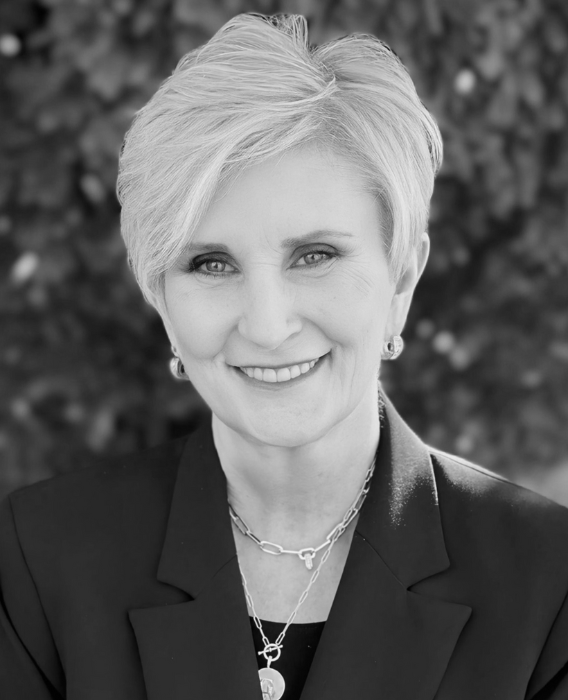
Clark Wood - Chief Operating Officer
Clark Wood, the Chief Operating Officer at Utah Food Bank, manages the complex logistics of the statewide food distribution network. Overseeing the movement of millions of meals annually, the Chief Operating Officer optimizes supply chain workflows to ensure timely delivery to partner agencies. This role requires constant coordination with regional facilities to maintain inventory accuracy and food safety standards. Clark Wood implements data-driven processes to streamline warehouse operations and reduce waste across the entire distribution cycle. By monitoring performance metrics, the Chief Operating Officer identifies opportunities for scaling service capacity in high-need areas. The executive collaborates with other leadership members to integrate logistical capabilities with broader organizational goals. Through rigorous oversight of daily operations, the Chief Operating Officer guarantees that food assistance reaches families efficiently. Wood maintains a focus on operational excellence to support the mission of alleviating hunger throughout the state.
Aimee Botelho - Chief Human Resources Officer
Aimee Botelho, the Chief Human Resources Officer at Utah Food Bank, architects the talent strategy required to sustain a high-impact non-profit workforce. Managing recruitment, employee development, and organizational culture, the Chief Human Resources Officer ensures the team remains aligned with the core mission of fighting hunger. This leadership role involves designing comprehensive training programs that empower staff to handle the demands of large-scale food distribution. Aimee Botelho fosters an environment of professional growth and accountability, which directly supports the retention of skilled personnel. By implementing robust performance management systems, the Chief Human Resources Officer drives internal efficiency and operational stability. The executive works closely with the leadership team to cultivate a culture of service and dedication. Through the strategic management of human capital, the Chief Human Resources Officer enables the organization to meet the evolving needs of the community. Botelho secures the organizational foundation necessary for long-term success.
Scott Woodhead - Chief Operations Officer
Scott Woodhead, the Chief Operations Officer at Utah Food Bank, directs the physical infrastructure and facility management required to support statewide hunger relief initiatives. Overseeing the maintenance and expansion of multiple distribution centers, the Chief Operations Officer ensures that all physical assets remain fully functional for high-volume food processing. This role involves managing capital projects and facility upgrades to enhance the safety and capacity of storage environments. Scott Woodhead coordinates with external vendors and internal teams to optimize the utility of all operational sites. By focusing on facility-level efficiency, the Chief Operations Officer supports the broader goal of maximizing meal distribution across the state. The executive monitors infrastructure performance to prevent service disruptions and maintain consistent support for families in need. Through the strategic management of physical resources, the Chief Operations Officer drives the operational reliability of the organization. Woodhead ensures that all facilities operate at peak performance levels.
Explore Leadership Teams in Non-Profit & Charitable Organizations


Fraser is a provider of autism and early childhood mental health services headquartered in Minneapolis, Minnesota.
Company Leadership LF
RF


Established in 1938 and located in White Plains, New York. March of Dimes is a non-profit organization which supports research, programs, education, and advocacy to improve the health of mothers and babies.
Company Leadership
CS
MS
AM

Founded in 1970, Harlem Children's Zone provides educational, health and parent-training programs in New York City's Harlem neighbhorhood
Company Leadership
KO
CS

Eckerd Connects is a national non-profit organization that serves children and their families through providing child welfare, juvenile justice, workforce development and behavioral health programs. Founded in 1968, the organization is headquartered in Clearwater, Florida.
Company Leadership CH


KB

Frequently Asked Questions Regarding Utah Food Bank Top Executives and Leadership Team
