
Leadership Overview
Texas A&M University System has 5 executives leading key functions including information technology, financial management, and academic leadership.
Committed to excellence in higher education, Texas A&M University System advances research, service, and learning across a vast network of institutions to benefit the state of Texas and the broader global community.
Committed to excellence in higher education, Texas A&M University System advances research, service, and learning across a vast network of institutions to benefit the state of Texas and the broader global community.
Leadership Roles at Texas A&M University System
Ryan Griffin - Vice Chancellor and Chief Financial Officer
Ryan Griffin, the Vice Chancellor and Chief Financial Officer at Texas A&M University System, manages the fiscal health and long-term economic strategy of the entire higher education network. Overseeing budget allocations and capital investments, the Vice Chancellor and Chief Financial Officer ensures alignment with the mission of providing accessible education. This leadership role involves coordinating with the Board of Regents to maintain financial transparency and accountability across all 11 universities. By optimizing revenue streams and controlling operational costs, Ryan Griffin directly impacts the growth and stability of the system. Griffin monitors statewide economic trends to guide strategic resource distribution. Through rigorous financial planning, the Vice Chancellor and Chief Financial Officer supports the expansion of research facilities and academic programs, ensuring that the organization remains a premier institution for learning and public service throughout the state.

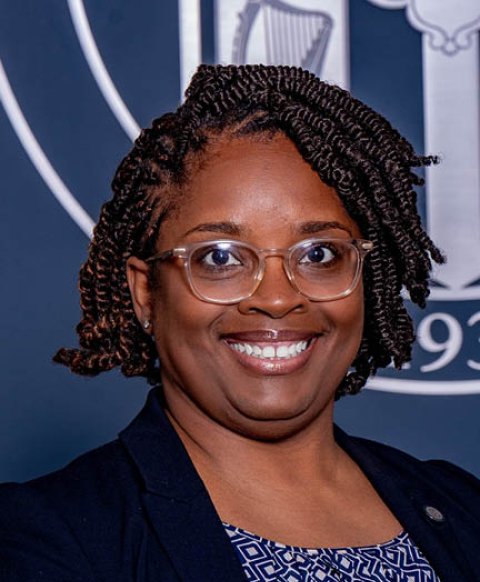
Tomikia LeGrande - President
Tomikia LeGrande, the President at Texas A&M University System, directs the academic vision and student success initiatives at a key regional institution within the network. Overseeing faculty development and curriculum innovation, the President ensures that educational programs meet the evolving demands of the workforce. This leadership role involves fostering partnerships with industry leaders to enhance research opportunities and community engagement. By prioritizing student retention and graduation rates, Tomikia LeGrande directly impacts the academic reputation of the university. LeGrande cultivates an inclusive campus culture that promotes excellence in teaching and scholarly activity. Through strategic planning and resource management, the President drives institutional growth, ensuring that the university remains a vital contributor to the broader mission of the system while serving the specific needs of the regional student population.

Mark Rudin - President
Mark Rudin, the President at Texas A&M University System, leads the strategic direction and operational management of a prominent regional university within the statewide network. Overseeing the expansion of research capabilities and academic outreach, the President ensures that the institution remains competitive in the higher education landscape. This leadership role involves collaborating with system administration to align campus goals with the overarching mission of public service. By enhancing the quality of undergraduate and graduate programs, Mark Rudin directly impacts the educational outcomes of the student body. Rudin manages complex administrative functions to maintain institutional efficiency and financial sustainability. Through the promotion of interdisciplinary research, the President drives innovation, ensuring that the university provides significant value to the local community and the state of Texas through high-impact scholarly contributions.
Kelly Miller - President
Kelly Miller, the President at Texas A&M University System, guides the administrative and academic operations of a key university within the system. Overseeing campus infrastructure development and student support services, the President ensures that the learning environment fosters academic achievement and personal growth. This leadership role involves engaging with stakeholders to secure funding for new research initiatives and facility upgrades. By implementing policies that improve campus safety and accessibility, Kelly Miller directly impacts the daily experience of the university community. Miller coordinates with other system leaders to share best practices and leverage collective resources. Through the advancement of community-based programs, the President drives regional development, ensuring that the university fulfills the commitment of the system to provide high-quality education and public service to the people of Texas.
Brad Hoover - Chief Information Officer
Brad Hoover, the Chief Information Officer at Texas A&M University System, directs the digital infrastructure and cybersecurity frameworks across the entire statewide network. Overseeing the integration of advanced data systems, the Chief Information Officer ensures that all 11 universities and seven state agencies maintain robust connectivity. This leadership role involves architecting scalable cloud solutions to support academic research and administrative efficiency. By modernizing legacy platforms, Brad Hoover directly impacts the technological capabilities of the system. Hoover secures critical data assets while fostering innovation in digital learning environments. Through the implementation of enterprise-wide software, the Chief Information Officer drives operational excellence, ensuring that the technological backbone of the organization remains resilient against evolving cyber threats while supporting the diverse needs of students, faculty, and staff across the expansive Texas landscape.
Explore Leadership Teams in Colleges & Universities


The Kelley School of Business (KSB) is an undergraduate and graduate business school at Indiana University in Bloomington, Indiana and Indianapolis, Indiana, United States. As of 2017, approximately 7,500 full-time undergraduate and graduate students are enrolled on its Bloomington campus, as well as 1,740 students at the Indianapolis campus. In addition, more than 800 students
Company Leadership ND
BN
EG
LS

Monash University is Australia's largest university with more than 80,000 students. In the 60 years since its foundation, it has developed a reputation for world-leading high-impact research, quality teaching, and inspiring innovation. With four campuses in Australia and a presence in Malaysia, China, India, Indonesia and Italy, it is one of the most internationalised Australian universities.
Company Leadership FM
AP
LD
TF

NSU Florida, founded in 1964 and headquartered in Fort Lauderdale, Florida, offers degrees in both undergraduate and graduate-level curriculum. The University offers programs including undergraduate degree programs in nursing and business, as well as graduate degree programs in accounting and biology.
Company Leadership AM
IC
AG

The Virginia Space Grant Consortium (VSGC) is an umbrella organization headquartered in Hampton, Virginia, that partners with NASA, industry, and institutions to provide STEM education and promote STEM research. Designated by NASA in 1989, the consortium consists of a coalition of five Virginia colleges and universities, state educational agencies, and other aerospace interests. It serves K-12 students, higher education students, and educators through free scholarships, fellowships, internships, and NASA summer academies. The organization delivers value by coordinating aerospace-related educational efforts and workforce pipeline initiatives, such as the Commonwealth STEM Industry Internship Program and the 3D Cybersecurity Pipeline, to prepare the next generation of the STEM workforce.
Company Leadership MR


Frequently Asked Questions Regarding Texas A&M University System Top Executives and Leadership Team
