
Leadership Overview
Lynchburg College has 4 executives leading key functions including information technology, digital infrastructure, academic strategy, and institutional operations.
Committed to academic excellence, Lynchburg College fosters a transformative liberal arts environment that prepares students for professional success through rigorous undergraduate and graduate degree programs.
Committed to academic excellence, Lynchburg College fosters a transformative liberal arts environment that prepares students for professional success through rigorous undergraduate and graduate degree programs.
Leadership Roles at Lynchburg College
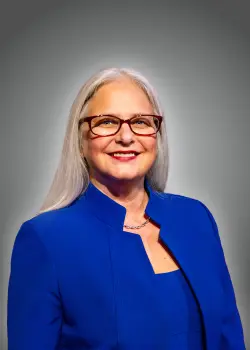
Sally Selden - President
Sally Selden, the President at Lynchburg College, leads the strategic vision and overall institutional direction of the liberal arts college. Overseeing academic programs, faculty development, and student success initiatives, the President ensures alignment with the core mission of providing high-quality undergraduate and graduate education. Sally Selden architects partnerships with regional stakeholders to expand the reach and influence of the institution. By managing the executive leadership team, the President drives financial sustainability and long-term growth. This leadership role involves representing the college to the board of trustees and the broader academic community. Selden prioritizes the enhancement of the campus experience through rigorous academic standards and inclusive community engagement. Through the promotion of scholarly excellence, the President strengthens the reputation of the college. Selden maintains a focus on institutional advancement and the continuous improvement of educational services for all students.
Brian Hudson - Chief Information Officer
Brian Hudson, the Chief Information Officer at Lynchburg College, directs the comprehensive digital strategy and technological infrastructure supporting the academic mission. Overseeing campus-wide network security, data management, and instructional technology integration, the Chief Information Officer ensures seamless connectivity for students and faculty. Brian Hudson architects scalable cloud solutions that modernize administrative workflows and enhance the overall learning experience. By aligning technical resources with institutional goals, the Chief Information Officer drives innovation across the Virginia campus. This leadership role involves managing complex cybersecurity protocols to protect sensitive research and student data. Through the implementation of advanced software systems, the Chief Information Officer optimizes operational efficiency. Hudson maintains close collaboration with academic leadership to integrate digital tools into the curriculum. Ultimately, the Chief Information Officer secures the technological foundation necessary for the long-term growth and academic reputation of the institution.
Bryson Childress - Deputy Chief Information Officer
Bryson Childress, the Deputy Chief Information Officer at Lynchburg College, manages the daily execution of IT operations and technical support services. Focusing on the reliability of campus hardware and software systems, the Deputy Chief Information Officer maintains high-performance standards for all digital classrooms. Bryson Childress coordinates the deployment of essential educational software, ensuring faculty possess the tools required for effective instruction. By supervising the technical support teams, the Deputy Chief Information Officer resolves infrastructure challenges and minimizes downtime across the university. This role involves monitoring system performance metrics to identify areas for continuous improvement. Childress collaborates with the Chief Information Officer to implement long-term technology roadmaps that support the liberal arts curriculum. Through proactive maintenance and user-focused support, the Deputy Chief Information Officer enhances the digital environment for the entire campus community. Childress ensures consistent technological access for all students.
Tiasia Tatem - University of Lynchburg
Tiasia Tatem, the University of Lynchburg at Lynchburg College, manages the operational integration of university-wide initiatives and administrative functions. Overseeing the coordination of cross-departmental projects, the University of Lynchburg ensures that institutional goals remain consistent with the liberal arts mission. Tiasia Tatem architects streamlined processes that improve communication between academic departments and administrative offices. By facilitating collaboration across the campus, the University of Lynchburg supports the successful delivery of educational services and training programs. This leadership role involves analyzing operational data to identify opportunities for increased efficiency and resource allocation. Tatem works closely with the executive team to implement policies that enhance the student experience. Through the management of key institutional projects, the University of Lynchburg drives progress on strategic objectives. Tatem ensures that all operational activities support the long-term success and academic integrity of the institution.
Explore Leadership Teams in Colleges & Universities


University of the Pacific is a private university founded in 1851 with campuses in Stockton, Sacramento, and San Francisco, California. The institution provides a student-centered learning experience integrating liberal arts and professional education across nine schools and colleges, offering more than 160 undergraduate, graduate, and professional academic programs. Its McGeorge School of Law, located in Sacramento, specializes in public law, international law, and advocacy, providing degrees including the JD, LLM, JSD, MSL, MPA, and MPP. The university delivers value through personalized learning, small class sizes, and experiential opportunities such as legal clinics and community involvement programs.
Company Leadership MC
SI

UMass Dartmouth is a national research university that offers a range of distinctive bachelor’s, master’s, and doctorate degrees on an innovation-rich campus. The university is committed to providing accessible education, including a free tuition program for Massachusetts students demonstrating financial need. UMass Dartmouth serves a diverse student body, focusing on hands-on learning and research across various disciplines, including business, engineering, nursing, and the arts. The institution aims to foster student success and community engagement through its comprehensive academic programs and vibrant campus life.
Company Leadership HD
AS
EA

Amarillo College is a public community college offering first- and second-year university courses. Founded in 1929, the university is based in Amarillo, Texas.
Company Leadership CH
EP
DS

The California Institute of the Arts (CalArts) is a private art university in Santa Clarita, California. It was incorporated in 1961 as the first degree-granting institution of higher learning in the US created specifically for students of both the visual and performing arts. It offers Bachelor of Fine Arts, Master of Fine Arts, Master of Arts, and Doctor of Musical Arts degrees through its six schools: Art, Critical Studies, Dance, Film/Video, Music, and Theater. The school was first envisioned by many benefactors in the early 1960s, staffed by a diverse array of professionals including Nelbert Chouinard, Walt Disney, Lulu Von Hagen, and Thornton Ladd. CalArts students develop their own work, over which they retain control and copyright, in a workshop atmosphere.
Company Leadership SM
BH
SL
LH

Frequently Asked Questions Regarding Lynchburg College Top Executives and Leadership Team
